
Tinsel: Disconnection

Tinsel: Disconnection

Connect to God

Philippians 4:4-7

Rev. Tim Callow

Preached Sun. Dec. 15th, 2024

I’m an avid reader. I usually read about seventy books a year. That’s well over a book a week. So when I tell you I’m an avid reader, I do mean that. But, truthfully, in all that I read there are only a handful that stick with me like a tough piece of meat. I have to keep chewing on them until they are done. If they will be done. One of those books is a work of anthropology called How Forests Think by Eduardo Kohn. The gist of the book is he tries to explain the animism of an Amerindian tribe called the Runa using a theory of signs and symbols. Animism is the belief that spirits inhabit most things and that these spirits are personal. So, in short, he uses a theory of signs to show that to the extent that even a tree gives signs to a monkey, they are communicating, and if they are communicating they are “living” and “thinking.”

This much is way too complicated for a Sunday morning sermon and I will not be getting into it. But it’s all to say there was one part of the book that particularly struck me. He was describing a trip he had taken deep into Colombia for field work. His bus got caught in mud and they had to stop. He knew the area was prone to mudslides and imagined another one might be imminent. But to his shock neither the other passengers or the driver showed any concern for the danger. He immediately felt a great deal of anxiety and dis-ease. Looking back on the episode he realized it was because the environment had sent him a series of signs, the mud, the hill, and so on, that added up to an immanent threat. At least, by his interpretation of the signs. But no one around him showed the slightest interest in the threat. He had the experience of being thrown outside of the constellation of signs that make up the world. He felt threatened, alienated, isolated, and this feeling of threat and alienation from both the world and the others created in him a deep sense of anxiety.

The reason this section of the book struck me is it put into words, more than anything else, my own experience with anxiety. Now, everyone has their own experiences and I do not mean to delegitimize any other by sharing my own. But I began experiencing panic attacks in the fourth grade, and for all of grade school anxiety was a constant feature of my life. It did not begin to subside until my freshman year of undergrad. So that’s a substantial portion of my life where I would, daily, experience intense anxiety. And, to my knowledge, I was the only person in class who suffered in the manner that I suffered. So whenever an attack hit I felt very disconnected from the rest of the world. It was, as if, the signs I were receiving did not make sense. My inner life, did not gel with my surroundings. And one way I coped with what I was experiencing was, effectively, to shut my self off from what was going on outside of me.

I have to think my experience is more common than I grew up believing. While other people may not feel what I felt with the same intensity, I have to think many of us experience a great dis-ease when the world around us does not mesh with what we feel inside. Take this holiday season, for instance. We are being bombarded with constant messages of peace, love, joy, family, consumerism, and the like. But for some of us this is the first holiday without a loved one. Others may be experiencing family separation. Or for whatever reason just cannot get into what is called the “holiday spirit.” And that experience, that feeling that the signs the world sends us do not mesh with our inward selves, our deep feelings, can create a distinct sense of anxiety.

Alienation, loneliness, are breeding grounds for anxiety. Nothing makes us feel more anxious than being alone in a crowd.

If this is how you feel, there is not something wrong with you. This loneliness, this disconnection, is a consequence of sin in the world. But not necessarily a consequence of your sin. We are not meant to be this way. We are meant to know joy and peace in God. And that is what God wants for us.

If you feel disconnected, alienated, anxious, this holiday season Paul gives us some advice on this third Sunday in Advent. “Do not be anxious about anything, but in everything by prayer and supplication with thanksgiving let your requests be made known to God. And the peace of God, which surpasses all understanding, will guard your hearts and your minds in Christ Jesus.” If the world seems alienating, connect yourself to God. After all, this whole season is really about God making himself known to us in a physical, tangible way. As we wait on Christ’s return God is willing to make himself known to you today.

In the depth of my anxiety I did not need to despair. The peace that surpasses all understanding does not necessarily make the anxiety go away. It is, after all, beyond our understanding. But it carries us onward. This world is deeply unsatisfying. Full of pain, suffering, heartache. Not much makes sense to us. And yet we may still rejoice in all things. Because at the heart of it all is love. And that love joined us in our suffering, that we may join in his victory.

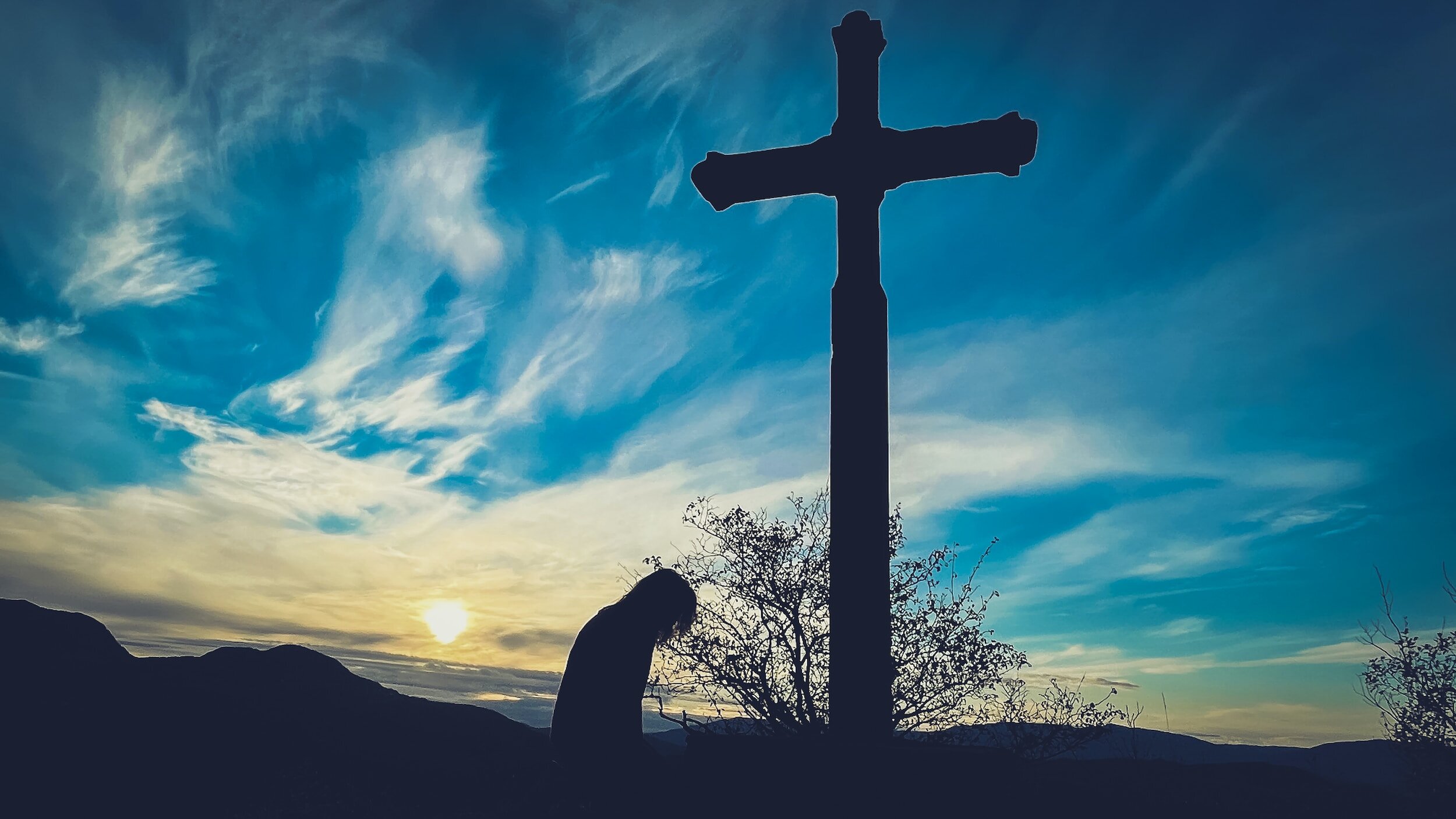
Tinsel: Original Sin

Tinsel: Original Sin

Grace is Prior

Luke 1:68-79

Rev. Tim Callow

Preached Sun. Dec. 8th, 2024

G.K. Chesterton, the Catholic journalist and man of letters, once remarked that he thought it was surprising that “certain new theologians dispute original sin, which is the only part of Christian theology which can really be proved.” At least, according to Chesterton, if there is any element of Christian theology open to empirical verification it’s that people just ain’t no good.

But I think Chesterton is doing a little slight of hand here. I want to do justice to those who have trouble with the doctrine original sin. Original sin is not the doctrine that people do bad things from time to time. Or even that people have a tendency to do the bad thing. It is the idea that being born in sin we are held captive to sin. That when Adam and Eve ate of the forbidden fruit they contaminated all of humanity with sin. The reformation doctrine here is that we are totally depraved, that we cannot help but sin in all that we do. At least, when it comes to our own powers, as concerns our own nature.

Perhaps you see why someone might bristle at the idea that we are held so entirely captive to sin we can’t do anything but sin. This idea is not, in fact, empirically verifiable. It would seem, rather, the opposite idea is empirically verifiable. There are all sorts of decent buddhists, muslims, jews, and atheists. People who have sacrificed for the ideals of humanity, justice, and compassion. I only need to point to the example of Gandhi, who showed a willingness to sacrifice for the sake of freedom that is inspiring even for Christians.

Not only does it seem empirically verifiable that people are capable of doing good on their own power, but it also seems unnecessarily dour and anti-human to suggest otherwise. How can we say original sin is good news? How many people have experienced being called a sinner simply as a form of condemnation without hope of justification? It seems like original sin runs counter to the best insights of our time. We might say original sin piles on trauma. When people just need hope.

There’s a famous sermon from the puritan days given by a preacher by the name of Jonathan Edwards. In it he likens the human predicament to a spider being held over the fire by God, “his wrath towards you burns like fire; he looks upon you as worthy of nothing else, but to be cast into the fire; he is of purer eyes than to bear to have you in his sight; you are ten thousand times more abominable in his eyes, than the most hateful venomous serpent is in ours.” Is this what we mean when we talk about Original Sin?

Classic evangelical sermons start from sin and move to grace. They seek to puncture our confidence in ourselves. Tear apart our illusions about how successful we are, or how good we are. I know of one evangelistic technique that asks someone if they’ve stolen anything in their lives. Most have, even if it was a candy bar or a song online. So you say, “so you are a thief, then? What do you think should happen to thieves? Have you lied? Well you’re a liar then. What do you think should happen to liars?” And so on. The idea is before you can get the good news, you need to be fully aware of the bad news. God’s grace is magnified by our own unworthiness, by our own predicament.

There is a place for such preaching. John the Baptist preaches repentance. The people need to turn away from their sins and toward the grace of God. For many it is beneficial that they hit rock bottom, so that God can raise them up. But if we start at Original Sin, act as if Original Sin is the one empirically verifiable aspect of our theology, I think we’ll miss something very important and distort the gospel. We can only come to a knowledge of the depth of our sinfulness, if we first come to a knowledge of the fullness of God's grace. The grace of God is always, always, always prior.

This morning’s responsive reading is Zechariah’s Benedictus from Luke chapter 1. When the Lord loosen’s Zechariah’s lips upon the birth of his son John he sings out this song. It concludes thus, “And you, child, will be called the prophet of the Most High, for you will go before the Lord to prepare his ways, to give his people knowledge of salvation by the forgiveness of their sins. Because of the tender mercy of our God, the dawn from on high will break upon us, to shine upon those who sit in darkness and in the shadow of death, to guide our feet into the way of peace.” I recite this song in my personal devotions most every day. And I’m always struck by the image of “the dawn from on high” or, as older translations render it, “the dayspring from on high.” Zechariah sings that John is to give his people knowledge of salvation, because their sins will be forgiven. And that, in this time, God will bring about a great light, a new dawn, that will set peoples feet straight. That before they were in darkness, now they may be in light. And being able to see, they will know where to go.

Part of sin is self-deception. We are very good at self-deception. We are very good at excusing our own sins, which are of course not as grave as the other person’s. We are very good at excusing the sins of those we like, while magnifying the sins of those we don’t like. We are very good at straying from God. Keeping ourselves shut out in a life of amusement and entertainment. We seek out illusions that keep us from seeing as God sees. Living as God would have us live. This illusion, this self-deception, is shattered by God’s grace. By the preaching of the word, by encounter with God, by our own illusions breaking down. And when this happens, it is by the light of God’s grace, that we may look back and see how we once were.

Original sin is meant to identify this reality. That we are not as good as we think, and it is by grace that we are delivered. Thanks be to God.

Tinsel: Waiting

Tinsel: Waiting

Attend to the Means of Grace

Luke 21:25-36

Rev. Tim Callow

Preached Sun. Dec. 1st, 2024

What a strange scripture to open the holiday season. While Mariah Carey is singing “All I Want for Christmas is You,” the Hallmark Channel is nothing but Christmas Rom-Coms, Macauley Culkin is taking care of the wet bandits, and Ralphie is hoping for a Red Ryder Carbine Action 200-shot Range Model air rifle Jesus is telling us about the shaking heavens and the earth passing away. Santa Claus is Comin’ to Town while Jesus warns us about dissipation and drunkenness. The world tells us to buy, Jesus tells us to wait.

But we shouldn’t be so surprised. Jesus is not above provocation, and he’s not above shocking us. When a woman told Jesus, “blessed be the woman who bore you!” Jesus’ response wasn’t, “oh thank you, she’s a wonderful woman. Immaculate, even.” He said, “blessed are those who hear my words and keep them.” When he was called “good teacher,” he replied, “why do you call me good? No one is good except God alone.” When a pharisee told him he knew he was from God, he didn’t congratulate him on his powers of perception and wisdom, but told him instead “no one can see the Kingdom of God unless they are born again.”

Jesus does often provoke and shock. But he’s not shocking us just to shock us. He doesn’t mean to provoke us for the sake of provocation. But he means to teach us. And sometimes in order to open our minds we need to be shocked, if we want to see more clearly we need to be provoked. If we carry along our merry way we might miss what we need to see.

If there is any season of the secular calendar that can weigh us down with dissipation and drunkenness it’s Christmas. Not just literally, in drinking and partying, but also figuratively. We can get so caught up in the wreaths and tinsel, the cookies and carols, George Bailey and Ebenezer Scrooge that Jesus himself can feel tacked on. We’re more ready to talk about the Christmas Spirit than we are about the birth of the Christ. A vague joy than the one who gives us joy. Peace on earth than the prince of peace.

Jesus calls us to be on guard, to be alert at all times, that we would see the signs of the times with eyes wide open. That we would be aware of the workings of God, the movements of his Spirit. If we are focused on worldly things, like presents and parties, and letters and Nakatomi Plaza, we will not give due attention to the things of God. The monks of the middle ages had a saying, “I fear Christ passing me by.” Which is why they lived their life in attentiveness toward God in all his guises.

So how are we to wait? How are we to enjoy this season? I am reminded of an early controversy in the Methodist movement. There were those who believed nothing you did mattered before God gave you the grace of justification. That is to say, anything you did was sinful in some way before God gave you the assurance that he regards you as his own. So, these quietists said, the best thing to do is nothing. You should wait patiently for the gift of God’s grace. Just have faith it will come.

John Wesley did not like that answer. For one, he didn’t think it made practical sense. People will not wait for very long. Secondly, he didn’t think it made good theological sense of how God actually works in the Church. He believed waiting needed to be coupled with attending to the means of God’s grace. That is to say, we wait not by doing nothing, but in prayer, in fasting, in reading scripture, in receiving communion, in the corporate life of the Church. We don’t sit around and do nothing, because God has given us all these means by which he works. If we were to cut ourselves off from them, we are cutting ourselves off from God.

And so it remains for us today. If we are to wait without dissipation or drunkenness, if we are to remain alert, if we are to see the work of God, then we should avail ourselves of the means of his grace. Attend ourselves to the gifts he has given us. Let us make this a Holy Advent. In the midst of the hustle and bustle let’s seek out ways to renew our prayer life. Let’s pick up a daily practice of reading scripture. Let’s cut through the clutter of the season to focus our mind on what really matters. He is coming. So let us be ready.

Wisdom for Life: Temple

Wisdom for Life: Temple

God Unites Himself to Us in Steadfast Love

1 Kings 8: 22-30, 41-43

Rev. Tim Callow

Preached Sun. Aug. 25th, 2024

The ancient greek poet Philostratos once said, “the gods perceive future things, ordinary people things in the present, but the wise perceive things about to happen.” The gods perceive future things because they may possess absolute knowledge. Ordinary people only see what is happening in the ordinary stream of time. This, that, and then the other thing. But the wise may perceive the events about to take place. By their knowledge of people, the world, and God, they may guess at future events. These are not predictions, revelations from God. Rather, it is grasping at the pattern of things, knowing how people act, knowing the character of the God who loves them and they love.

Solomon is one such wise person. We are not told that he receives any special revelation, though we are told he has received special knowledge. That is the wisdom that God has given him. And by this wisdom he can perceive the things of God. If we receive that wisdom, cultivate that wisdom, we too can better discern the things of God.

Solomon is not only known for his wisdom, but he’s also known for building the Temple in Jerusalem. This morning we read from his dedication prayer, where he praises God and calls down blessings upon the Temple. It’s instructive to see how he describes God, what he takes to be the character of God.

Solomon prays, “O LORD, God of Israel, there is no God like you in heaven above or on earth beneath, keeping covenant and steadfast love with your servants who walk before you with all their heart.” Here Solomon identifies two characteristics about God. The first is that God is a covenanting God. That he makes promises to Israel, and he keeps them. He made promises through Moses, he made promises through Joshua, he made promises through Saul, and made promises through David. “Therefore, O LORD, God of Israel, keep for your servant my father David that which you promised him, saying, 'There shall never fail you a successor before me to sit on the throne of Israel, if only your children look to their way, to walk before me as you have walked before me.’” By making these promises God establishes a relationship with his people, a relationship that does not falter. God promises there shall always be successor on the throne of Israel, and so there is to this day in Jesus Christ.

The Temple Solomon is dedicating will be a place where the people of Israel can keep their relationship with God through prayer, worship, and sacrifice. It is a physical reminder and enactment of the covenant God has made.

But Solomon also says God shows steadfast love. This is a weighty word in Hebrew. It refers to the grace of God toward his people. That love that remains through the thick and the thin. The love that will never leave us or forsake us. It is the love described in the Song of Songs as, “as strong as death, its jealousy unyielding as the grave.” It is on account of this love that God sticks to his covenants, to his relationships.

But it is also on account of this love that God commits to be present in the Temple. Solomon says more than he knows when he asks, “But will God indeed dwell on the earth?”

The answer is yes. Because of God’s steadfast love. Because of the everlasting covenant he has made. Yes. God will indeed dwell on the earth. The one the heavens cannot contain will be held in the arms of his mother. The one who holds all in life will suckle at his mother’s breast. The one whose grace is over all his works, who makes the rain to fall on the just and the unjust alike will be protected by his earthly father. The one who cannot be harmed will be whipped. The deathless one will die.

Solomon was amazed at the steadfast love of God to choose a building made by hands. But God’s steadfast love is even greater than he imagined. God remains with us in our illness, in our doubts, in our despair, in our death. That he may give us life. This love cannot be severed. It is unending. Truly steadfast. Truly unyielding as the grave.

The wise Solomon perceives what is about to happen but only in a glimmer. He sees a piece of what the angels long to see, what the prophets and patriarchs wished to see. But what we have seen, what we have known. The ultimate expression, the definitive act, of God’s love for us. In dying our death, in giving us life, in erasing the barrier of sin. In reconciling us to himself.

Wisdom for Life: Solomon

Wisdom for Life: Solomon

Wisdom is Practical Know-How

1 Kings 2:10-12; 3:3-14

Rev. Tim Callow

Preached Sun. Aug. 18th, 2024

When I was in school we didn’t have the internet. If you wanted to find a book in the library you had to consult the card catalogue. When I worked on research projects in elementary school I had to go to the local cyber cafe to access the internet. I don’t know if you had a cyber cafe here in Bad Axe. But one of our local internet providers had a room with maybe eight or twelve PC’s and a bar with pop and candy. You’d pay for a certain amount of time at the computers, and could buy pop and so forth. It was a big deal growing up when we finally got the internet at home. On our shiny Windows 95 PC.

I still remember in middle school when our computer science teacher introduced us to this fancy new website: Google. It was better than yahoo, or lycos, or webcrawler, or altavista. It was a search engine that was more likely to put what you were looking for at the top. And was so slick it made yahoo directories obsolete. Now it seems ridiculous that a middle schooler would be introduced to Google.

The internet came with a lot of promise. It would make information free. Knowledge would stream through the cable lines to your computer like water through a tap. People would grow more informed, knowledgeable, and empathetic. How foolish we were back then.

Now we are so awash with information we don’t know what to do with it all. Only companies like Google, Apple, and ChatGPT know how to monetize all the information we generate. It used to be said, “A lie can travel half way around the world while the truth is putting on its shoes.” But now with the benefit of technology a lie can run at least three laps before truth’s shoes are laced. Does anyone go on Facebook expecting to find the truth anymore?

In a world so awash with information what we really need is wisdom. Not facts and figures, anecdotes and code, but real know-how. Practical knowledge that helps us navigate life and make sense of a rapidly changing topsy-turvy world. Perhaps this is why there is such an industry of gurus who claim to hold the key to a flourishing life. Like Jordan Peterson who claims his training in psychiatry helps him to understand the deeper meanings of Pinocchio and Moses, and how these stories give us at least twenty four rules for life. Or Tony Robbins who wants to help you get past your limiting beliefs to recognize your full potential. Or Norman Vincent Peale who wants you to think positively and, I dunno, it’ll just work out.

While the world of ancient Israel was not as fast moving or information heavy as today, people still sought wisdom. People of all times and places have sought that practical know-how that helps them lead their best life now. The Bible recounts one such individual: Solomon. Solomon, the Bible claims was the wisest person of his day.

This morning we heard how he got this wisdom. We are told that after David had died Solomon went to sacrifice to the Lord at Gibeon. It was there that the Lord appeared to him in a dream and for the sake of Solomon’s father David offered him anything he wished. "Ask what I should give you.”

While if I were in Solomon’s shoes I’m sure I would stammer, and wonder, and probably wake up without having asked for anything. But Solomon knew exactly what he wanted, exactly what he needed. “O LORD my God, you have made your servant king in place of my father David, although I am only a little child; I do not know how to go out or come in. And your servant is in the midst of the people whom you have chosen, a great people so numerous they cannot be numbered or counted. Give your servant, therefore, an understanding mind to govern your people, able to discern between good and evil, for who can govern this great people of yours?””

In other words Solomon says, “I have no idea what I’m doing! I can’t lead this people you have given me unless you give me a wise mind. A discerning mind. One that can tell evil from good and know what to do about it.” And this greatly pleases God. It pleases God because Solomon did not ask for wealth, or honor, or power. He asked for wisdom. And wisdom will always make us kindred with God. So God promises Solomon he will have wisdom, that he will be the wisest King. And moreover, “I give you also what you have not asked, both riches and honor all your life; no other king shall compare with you.”

The wisdom Solomon possessed was not simply a spiritual wisdom. An otherworldly wisdom. The wisdom of some monk on a far off mountain humming mantras or speaking in koans. This is not an escapist wisdom. The wisdom of the Solomon was the wisdom of know-how. The practical knowledge that allows one to live well, to lead well, to serve well.

Lucky for us, this wisdom did not die with Solomon. The books of Proverbs and Ecclesiastes recount this same wisdom. The Second Book of Kings shows that wisdom in action. And for the next few Sundays we will follow the lectionary as this wisdom is shown and described so we may see too how we may lead wise and flourishing lives today.

Mission

Jesus said to the twelve, “Do you also wish to go away?” Simon Peter answered him, “Lord, to whom shall we go? You have the words of eternal life; and we have believed, and have come to know, that you are the Holy One of God.”- John 6:67-69

By certain metrics the mission field seems ripe for the Church. Rates of anxiety and depression have skyrocketed among youth and young adults. People, by and large, are less involved in community groups. But this lack of involvement also breeds a strong desire for community. Our society breeds a general divisiveness, when Christ promises to strike down the diving wall and make us one. It’s hard not to sense a general malaise. And yet, the Church so often seems part of that malaise. Church attendance shrinks along with the VFW and Lions club. The internet, sports, movies all help us forget our predicament for awhile. There is also something about our lives that can numb us. While people know things aren’t right, they also lose a sense of the transcendent, of the divine.

Of course Christianity is more than a general sense of transcendence, or a feeling of community and unity. Jesus says he is the the resurrection and he is life. He says no one comes to the Father except by him. Christianity also entails a particular story about this particular man. And it entails following his teachings. Sometimes these teachings are hard, or countercultural. Jesus once alienated a whole crowd by claiming to be true food and true drink. He said he was the bread of heaven that, if we eat it, we will never die. When the crowd dispersed he turned to his disciples and asked them if they wanted to walk away too. Peter’s response is remarkable, “Lord, to whom shall we go? You have the words of eternal life.”

There is something intrinsically powerful about the word of the Good News. There is something enticing and compelling about the story of Jesus and his teaching. This is nothing we need to dress up. Nothing we need to change. Only something to share with confidence and with boldness. The story we have just so happens to meet many of the maladies of our time. And it’s true.

Eternal Life Is... Assurance

Eternal Life Is… Assurance

The Victory of God Gives Us Assurance of Peace

1 John 5:1-6

Rev. Tim Callow

Preached Sun. May 5th, 2024

One of the central themes of Methodism is the theme of assurance. John Wesley searched desperately for that assurance. He wanted to know that Christ died for him. He didn’t want to know that merely on an intellectual level, but he wanted to know it on the level of the heart. He wasn’t seeking some argument or historical proof, but he was seeking that encounter with the living one that alone brings inner peace. Famously, he first experienced that assurance while listening to a public reading of Luther’s Preface to Romans while he was on Aldersgate Street. It was that moment, he said, that he felt his heart strangely warmed and knew that Christ died for him even him.

We believe that anyone can come to have this same assurance of faith. That Christ died for them, lives for them, that the victory is won for them. This assurance that is deeper than any argument because it is an assurance of the heart. One way we may understand eternal life is the experience of this assurance. Because when we know from the heart that we have been delivered from the world, then we also know peace and show forth fruits of love.

You may recall that “world” for John has a peculiar meaning. John does not simply mean this rock that we live on. “World” for John is all the unredeemed creation. “World” names the forces of sin and wickedness in this world. “World” names networks of gossip. “World” names the pride of self-righteousness. “World” names exploitation, and taking advantage of other people. “World” names fear of the other. “World” names the sinful inclination to look down on others. “World” basically means those who act as if Christ had not come into the world to die for our sake, to overcome death, to spread his love. “World” is the rejection of Jesus, rejection of his truth. This is the opposite of assurance, which leads to peace. Being caught up in the world blocks our spiritual senses, so to speak, and enslaves us to anxiety and resignation.

I have attended a number of funerals in my time. I can usually tell when the bereaved have the assurance of faith and when the bereaved do not. Where there is assurance of faith there is a certain calmness to the proceedings. There is a freedom to cry, a confidence in Christ, a peaceableness that doesn’t need to be summoned up. This is an extreme example, of course, but I think the same follows in many other aspects of life. The assurance of Christ’s victory, and the faith that this victory is won for me means I do not need to be so anxiously concerned about the dramas that enfold my life. It means I do not need to be cynically resigned to injustices. It means I can go by my life with a certain confidence, even in the midst of trial. This is eternal life in the midst of life.

I have been open about my own struggles with anxiety, especially when I was younger. It was difficult. Most days I would endure anxiety until 10AM. When I was in elementary school I was given a cot in the library to calm down when I needed it. Quite the loving offering from the school now that I think about it. The problem was all consuming, and I had assumed would remain just as bad for the rest of my life. I recall some people tried to heal me by the power of prayer. That didn’t work. It wasn’t God’s will. I certainly know that now. But one thing that was God’s will was that in the midst of this suffering I would be anchored in faith. And however bad it got, I never lost the assurance of faith. It was my bedrock. It was because I had this assurance of God’s victory and presence in my life that I endured. And things have certainly gotten better. I was not hopeless, I was not resigned, but I trusted. That assurance, that trust, that faith got me through, at least.

Though the world has been out there for two thousand years, and though it may seem to be as strong as ever, perhaps even stronger, we know that the world and its resignation has been overcome. To invert Mark Twain, rumors of the world’s vitality have been greatly exaggerated. As John reminds us this morning, “For everyone who has been born of God overcomes the world. And this is the victory that has overcome the world–our faith.” Christ has overcome the world on our behalf. We do not need to resign ourselves to its inhumanity, and we are not called to fight and put the burden all on our backs. Christ has already won the victory as a gracious act of God. And the victory is our faith in God, who sent Jesus Christ, in his death and resurrection to overcome the whole logic of the world. The logic of might makes right, of meaningless suffering, of zero sum games.

The logic of the world is threatened because Christ has overcome the grave. The world’s power is the power of the grave. The threat of death is what keeps exploitation going, what keeps oppression going, what keeps worldly people frantically trying to get out of life alive. But if the grave has been over come we can no longer be threatened with death. And if we can no longer be threatened with death then we are free, free to love. Free from pride that is really the fear of death. Free from lust that is a way to forget death. Free from anger that assumes death has any sway. This freedom we may understand to be eternal life.

John says our faith is the victory that has overcome the world. Our faith in the one who wins the victory on our behalf. And because he has won the victory we may experience the assurance of eternal life. The assurance of knowing, really knowing, Christ died for me. The assurance of knowing, really knowing, that he lives for me. The assurance of knowing, really knowing, that he has a life for me. And we experience that assurance when we love. Because in loving we are following the higher logic of God that short-circuits the logic of the world.

Eternal Life Is... Love that God Is

Eternal Life Is… Love that God Is

God is Love

1 John 4:7-21

Rev. Tim Callow

Preached Sun. April 28th, 2024

One of the more difficult doctrines of the Church is the doctrine of the Holy Trinity. That is, the doctrine that God is eternally three persons: Father, Son, and Holy Spirit. As easy as that may be to say it is difficult because it eludes easy explanation and is best thought of as a mystery. There are many analogies of the Trinity, but they tend to run aground somehow.

There is St. Patrick’s famous analogy of the shamrock, that as the shamrock has three leaves but is one, so the Trinity has three persons but is one. But the image makes you think of God having parts, there’s the Jesus part and the Father part and the Holy Spirit part, and they’re all connected somehow. But that is not the doctrine of the Trinity! It is not that if you were to see God you’d have Jesus over here and the Father over here. God is truly one.

I’ve also heard the analogy that the Trinity is like water that exists in three states: liquid, solid, and gas. But while that gets right that there is only one essence to God, it would make us think God is sometimes the Father, or sometimes Jesus. But there is no sometimes to God. God is eternal. God is not being Jesus here and being the Father over there. It is not one God putting on a show across the veil of eternity. How then do we make sense of a scene like Gethsemane where Jesus is earnestly praying to his Father? Is it a divine pantomime? Jesus really prays, and is really God, and is really one in being with the Father. But that one being is not putting on a show.

The doctrine of the Trinity eludes any image. When you try to conceive it it slips through your grasp. When you try to render it concrete in your mind you’ve already lost it. It’s a tricky thing. Which is why it’s best received as a mystery. We know God is one because Moses says so. “Behold, O Israel, the Lord your God, the Lord is one.” Yet we also know that God is three because Jesus prays to the Father and sends the Holy Spirit. And we pray to the Father, and the Son, and the Holy Spirit. Yet the witness of scripture and our own experience points to a great mystery beyond us.

You may wonder, then, well, what’s the point? It reminds me of the quote from Ferris Bueller’s Day Off talking about a test he didn’t take, “what’s the point? I'm not European. I don't plan on being European, so who gives a crap if they're socialists? They could be fascist anarchists - that still wouldn't change the fact that I don't own a car.” Is the Trinity a vestigial doctrine? Like we have an appendix that doesn’t do us any good but perhaps inflame itself, has the Trinity become that? A doctrine that once meant something in the course of the history of the Church but is now a trivia question and not a living aspect of our faith?

In his letter, this morning, John brings us close to the heart of the mystery of the Trinity. “Whoever does not love does not know God, for God is love.” John can say God is love because God is Trinity. God is the perfect eternal union of three persons. God is pure, self-sufficient love for all eternity. God does not create because God needs us. God creates because God is overflowing in love and desires others to join in that love. And God’s love is so abundant that it results in Jesus joining the human family that we may join the divine family. And though Jesus is put to death, “love is as strong as death, its jealousy unyielding as the grave.  It burns like blazing fire, like a mighty flame. Many waters cannot quench love; rivers cannot sweep it away. If one were to give all the wealth of one’s house for love, it would be utterly scorned.” (Song of Songs 8:6-7) Out of love for us he overcomes the grave so that nothing would stand in the way of God’s love for us.

God desires fellowship with us out of love for us. God grants eternal life for us that we might love eternally. That we would join in the love that God is. This is what it means to love in truth. To join in God’s love, and let that love overflow in others. When we share in love, when we worship, rejoice, forgive, show mercy, act generously, we experience the eternal love that God is. We experience the life eternal that God is.

Eternal Life Is... Love in Truth and Action

Eternal Life Is… Love in Truth and Action

Love is a Verb

1 John3:16-24

Rev. Tim Callow

Preached Sun. April 21st, 2024

My last year in Durham the churches, service organizations, city, and police department, united to crack down on panhandlers. The city passed ordinances against “aggressive panhandling” which seemed very vague to me. The churches and service organizations supported a marketing blitz telling people not to give money to people on the street. Instead, the pamphlets said, direct them to the local homeless shelters where the professionals can help them get on their feet. Well, I knew very well the local shelters didn’t have the capacity to serve Durham’s homeless. It was effectively a campaign, not to help, but to kick them out of town.

I discovered the reason behind the ordinance and the campaign the year after I left. Millions of dollars were being poured into the areas of Durham surrounding Duke to build high rise apartments, boutique shops, and condominiums. As long as the panhandlers stuck around it would hurt business. It’s a lot easier to kick people out than it is to give them the help they need.

I was stuck by the Churches that were involved in this campaign. They were the social justice churches. The ones that spoke the most about love and justice and acceptance. The ones who, surely, cared deeply for the people on the street and I’m sure gave generously toward the various programs in town that served people experiencing homelessness. And yet, they were backing a campaign that plainly harmed the people on the street. They plainly played their role on behalf of wealthy developers who wanted to get the panhandlers out of town. They spoke words of love, but in this instance I don’t see how they followed through in action.

John exhorts us this morning to love. Love is not a word owned by the right or the left. Love is what disciples of Christ do. But John also doesn’t want us to merely love in word or speech. He doesn’t want us to talk about love and do nothing. Or worse, to talk about love and do things that might hurt others. I was reading a book the other day by someone who digressed to say that they are all about love, they just think their enemies are agents of satan. That’s love as window dressing. Love as good feeling. It’s not enough.

John exhorts us to love not simply in word or speech, but in truth and action. What does that mean?

We love in truth, first, because we love God. John also says, “And by this we will know that we are from the truth and will reassure our hearts before him” Being “from the truth” is the same here as being from God. The source of all truth. The one who gives us our true confession. Love flows from the love of God. The God who is love. I’ll be talking more about this later on.

But we love, secondly, in action. The love we have of God, or rather God’s love for us, overflows into love for others. And this love overflows into love that is found not in merely words and good feelings. But it is found in action. It is practiced. It is concrete.

We can think about this love in different ways. It can be the love of presence. Lending a listening ear, sitting with someone in their illness or grief. Or a phone call. Few things say love more than being there, even in silence. Even when there is nothing to say. Perhaps, when there is nothing to say, we are showing the greatest love of all.

This love can also be the love of gifting. When someone is in need of help and we give them what they need to get by. There is love. But I’m thinking, too, of something as simple as a card. Or maybe a meal. In these ways we show love concretely.

But love can also be the love of doing. Giving up of ourselves in concrete ways to support someone. When I was up north God’s Country Cooperative Parish would build ramps or fix bathrooms. There’s love in that.

What characterizes love, in the end, John tells us is, “We know love by this, that he laid down his life for us--and we ought to lay down our lives for one another.” In presence, gifting, and doing, we lay down our lives. We give our time, talents, resources, attention, to others for their sake. Because they are one for whom Christ died. And they are our sister, or they are our brother, or they may be in that moment Christ for us. After all, Jesus says what you do for the least of these you’ve done also for me. In all these ways we make love real and concrete.

And eternal life is found in the mutual sharing of love.

Eternal Life Is... Being Children of God

Eternal Life Is… Being Children of God

We are Infants in Christ

1 John 3:1-8

Rev. Tim Callow

Preached Sun. April 14th, 2024

Every household works differently. Some of my earliest memories going to friends houses are being surprised by the way they pray (holding hands instead of clasping) and being amazed at all the toys they have that I didn’t have. Like Power Wheels. Other homes were tidier than what my parents tolerated from me. Others were significantly less tidier than my parents would tolerate from me. Sometimes I’d wonder how anyone in that house could think, because it was significantly louder all the time than what I was used to at home. One summer I went to a friends house regularly on the other end of the neighborhood, and his parents got annoyed if we were inside too much and booted us out of the house regularly. Where my parents would never boot me out of the house.

Tidiness, volume, time spent inside, toys, meals, every household has a different way of doing things and walking through the door as passing a threshold into their world. And for a moment, if they are a good host, you are a part of the family until you go back to your own. For John there are two families, two households that matter. There’s the household of God and there’s the household of the world. The family of God, and the family of the world. In one place we find eternal life and joy. We are the beloved little children of God! But in the other is rejection and lawlessness. That’s is broad view of the world, one that at first might seem a tad unforgiving.

John tells us this morning that we are, by God’s grace, children of God. Not of our own accomplishment, but as God’s whole and complete gift for us. That means we are family. Family with each other, and family with God. The Church is like a household with her own ways of doing things. And as children of God we are expected to take on the ways of the household. To take on the practices and form of life of God’s children.

He goes on to say, “Everyone who commits sin is guilty of lawlessness; sin is lawlessness. You know that he was revealed to take away sins, and in him there is no sin. No one who abides in him sins; no one who sins has either seen him or known him. Little children, let no one deceive you. Everyone who does what is right is righteous, just as he is righteous.” Like I said before, John has a circular way of writing that can get confusing. But he points to the character of the children of God. Jesus came to take away sins. So the children of God abhor sin. We are not lawless like the devil, but we are righteous. And we abide in God by putting away sin.

What does it mean to be a child of God? To live in the household of God? But to put away sin. To follow the will of God. To show forth his life, to forgive as he forgives, to show mercy as he shows mercy, to abstain from all the temptations of the world. When we do these things we abide in God and know his eternal life. Because we live the life we were made for.

But this presents a problem. Can we say any of us are children of God by John’s standards? He says being a child of God is a gift of God. Not an accomplishment. And yet he says a child of God does not sin. That if we abide in God we will not sin. If this is what it takes to be considered a child of God, a member of the household of God, I don’t know if I can count myself in that number. I doubt any of us here can do so either. As it stands, how is any of this good news? Would we all be banished from eternal life because we cannot keep the standards of children of God?

But John also says, “what we will be has not yet been revealed.” We are children, yes. We are infants in Christ. We cannot take care of ourselves. We are utterly helpless. Though we are learning! Most of the time I sin I don’t even think about it. I’m like an unthinking baby. And maybe when you think on your mistakes you’ll see the same. God makes us his children, but what we are is not yet to be revealed. God makes us his children, and will work through us that we may grow into the fullness of Christ, that is the fullness of love.

We are infants who have not yet reached full maturity. But that is why we have grace, that is why we have the church, that is why we have the scripture, that is why God does not give us up or abandon us. The household of the family of God is the place where we, who find ourselves brothers and sisters, may grow and mature. Where we, who are made family, may take on the characteristics of the family. May learn the rules of the household. And may show forth in the witness of our lives the love of our Father in heaven.

Eternal Life Is... Fellowship With Jesus

Eternal Life Is… Fellowship with Jesus

God Offers Life Here and Now

1 John 1:1-2:2

Rev. Tim Callow

Preached Sun. April 7th, 2024

The gospel is not afterlife insurance. Sometimes the good news of Jesus Christ can come off this way.

Have you ever told a lie? Then you’re a liar. Have you ever stolen anything? Then you’re a thief? What makes you think you deserve to get into Heaven? Can say you know for certain that if you were to die today you would go to heaven? Suppose that you were to die today and stand before God and he were to say to you, "Why should I let you into my heaven?" what would you say? Ah, but despite your manifest sinfulness and stammering tongue before the almighty there is one who intercedes to your defense. One who paid the penalty you do not need to pay. And by his blood you may make it into Heaven.

There is something here that is too reductive. The gospel becomes a matter of the hereafter, not the here and now. The work of Jesus concerns where we may spend eternity but it becomes unclear what difference Jesus makes in our lives at present. The gospel as afterlife insurance, in the end, feels like a great deal. We join the spiritual multilevel marketing scheme. Avon ladies for Jesus. We accept the deal and look to pass it on. But more importantly, this is not the picture we get when we turn to the Bible. The good news is not only a matter of the hereafter, it’s a matter of the here and now.

Jesus says he came that we might have life, and have it abundantly. He says, “I am the resurrection and the life, he who believes in me though he dies yet shall he live.” And “I am the way, the truth, and the life.” He promises eternal life. But not simply as a hedge against the hereafter. Eternal life in scripture is a quality of life we may know in the here and now. A life that comes from the source of life. A life in fellowship with him.

Throughout the season of eastertide I want to focus on John’s first letter to give some description of this resurrection life, the eternal life we may experience now in Christ. John opens up saying, “We declare to you what was from the beginning, what we have heard, what we have seen with our eyes, what we have looked at and touched with our hands, concerning the word of life— this life was revealed, and we have seen it and testify to it, and declare to you the eternal life that was with the Father and was revealed to us— we declare to you what we have seen and heard so that you also may have fellowship with us; and truly our fellowship is with the Father and with his Son Jesus Christ.”

John has a circular way of writing that can make one’s eyes glaze over. I know I oftentimes have difficulty reading John for this reason. What is he saying here? John says he is writing this letter to declare what he has heard, seen, and touched. The person Jesus Christ. This person who is also eternal life. The eternal life that was with the Father. The eternal life that we may receive through fellowship with Jesus.

This fellowship constitutes our eternal life as we know it here on earth. We experience that eternal life as long as we maintain fellowship with Christ in the Church. This is why John goes on to say, “If we say that we have fellowship with him while we are walking in darkness, we lie and do not do what is true; but if we walk in the light as he himself is in the light, we have fellowship with one another, and the blood of Jesus his Son cleanses us from all sin.” We experience eternal life in fellowship. We show forth this fellowship through our love of one another. By walking as Christ walked. By following him.

John opens this letter with a firehose, laying out his key ideas and concepts. We will have time to dig into all of this. How it is that we maintain fellowship with Christ through our love of God and one another. How this fellowship is the means by which eternal life is experienced. And how this fellowship is first established through the atoning sacrifice of Jesus. But I want to point to something concrete that may help us.

Today is our communion Sunday. Communion is the sacrament of eternal life. In communion we ask for forgiveness. We are forgiven. We reconcile ourselves to one another. We remember the sacrifice of Jesus. We join ourselves to his sacrifice, asking to be made his body and blood for the world. We receive the bread, we drink from the cup, and we are united to Jesus.

But more than being united to Jesus, through Jesus we are united to one another. As the many grains form one loaf, as the many grapes make one cup, we are made one in Christ Jesus. The communion we know is not simply our private communion with Jesus, it is our communion with one another. It is an instantiation of the body of Christ in our midst. It is the moment at which eternity meets history. Christ makes himself present and known. And we may, for a moment, glimpse at that eternal banquet, the wedding supper of the lamb, and know that joy. We may know the hope of resurrection, that we who partake of this meal will partake of it in heaven.

Eternal life, then, is known in communion. It is experienced in fellowship. A fellowship Jesus makes possible through his example and sacrifice. A fellowship that is central to our Christian life.

Easter: To Galilee!

To Galilee!

Resolve the Chord

Mark 16:1-8

Rev. Tim Callow

Preached Sun. March 31st, 2024

Mark’s Gospel ends on a very discordant note, and waits for us to resolve it. Early in the morning, as the Sun is beginning to rise, Mary Magdalene, Mary the mother of James, and Salome make their way to the tomb with spices so that they might prepare Jesus’ body for burial. Jesus died late on a Friday afternoon, meaning there was only time to put him in the tomb before the Sun set and the Sabbath began. Now they could complete his burial, and say their final goodbyes.

They wondered how they might roll away the stone that blocked the entrance to the tomb. Would someone be there to roll it away for them? But when they arrive in the cold morning they notice, to their shock, that the stone had already been rolled away. They entered the tomb to see a young man in a white robe seated on the right side. But there was no body. It was all very bewildering.

The man, the angel, tells them that they shouldn’t be afraid, Jesus is risen as he said, he is heading to Galilee just like he said, so let Peter and the others know so they can meet him there. But the angel does little to calm them down. Instead, they are beside themselves in terror and flee the tomb saying nothing to anyone. And that is the end of the scene, and most probably the end of the Gospel. No resurrection appearance. No proclamation of the good news. No joy. But terror and amazement. Bewilderment and silence.

Why this discordant note? The resurrection is the event of Christ’s victory over death. It is the good news. It is the Kingdom of God revealed in power. It is the assurance of our salvation, our future hope revealed in history. It is everything. How come the response of the women is bewilderment and silence?

Mark is not entirely unique when it comes to depicting the disciples as having odd responses to the resurrection. Luke recounts the disappointment of two disciples on the road to Emmaus. They know the report of the women that Jesus has been raised but it doesn’t bring them any joy. It only brings confusion. He was the one to redeem Israel, but he died and now he’s raised? What could that possibly mean? It takes the resurrected Jesus to point them to the scriptures and reveal to them the plan of God. John recounts that following their experience of the resurrection Peter and the others return to fishing. Which is an odd response to an epochal event. The Resurrection simply led to confusion, bewilderment, even fear among the disciples.

But perhaps this is just an example of the Bible’s realism. Put yourself in the women’s shoes, or sandals as it were. You’ve gone through the trauma of Good Friday, seeing your close friend dangling naked on a cross. You are only beginning to accept that Jesus is dead on Saturday. You are exhausted from weeping, that exhaustion being the closest thing to comfort. You may be beginning to resign yourself to the reality of this evil world’s injustice and barbarity. We might imagine you never had a chance to sleep that Saturday night, so numb from the grief you feel. But when the dawn breaks you make your way to the tomb and the rock is rolled away. The body is not there. A man says he is raised. But that does not happen. It could not happen. People die and that’s it. If it were the case that Jesus is risen then it means death has lost its sting. It means you have to have hope. It means that you live in a world where bodies are reknit. Where the dead come to life. Where resignation is foolhardy. Where the evil powers of this world can no longer hold sway over you. Because they’ve lost their best weapon: the grave.

It is so easy to exhaust yourself in resignation. There’s something paradoxically comforting in that. The pseudo-wisdom of the way of the world. Being able to say, “I told you so.” Cynically removing oneself from the pains of this world. But it is a lot harder to have hope. To accept that this great event has taken place. That everything, everything is different. That a new creation has begun.

The angel tells them to go back to Galilee to see Jesus. But they remain silent. Because they are afraid of these things that have taken place, and the possibilities it suggests. But we can respond to that call by going back to the beginning of the book. I said Mark ends on a discordant note and asks us to resolve it. We resolve the discordant note of Easter Sunday by meeting Jesus in Galilee. By returning to the gospels again and again to learn what it means to live in this new creation, in this hopeful reality, in a world where death does not have the final say and we may join our brother Jesus in the Resurrection of the dead.

Someone used to tell me that the resurrection happened in an instant and the sermon doesn’t need to be much longer. Yes. I can simply say “He is risen!” and sit down. But what do we make of that? To the first disciples that was a statement of bewilderment and fear. They trembled at the thought of all it might entail. We are given this life to learn what it means to live in a world where it happened once, and will happen again. To live as if we will be raised. To love knowing that love cannot be defeated. To not fear death, because death is not the end. We learn these things by returning to the beginning, by reading the story, by following Jesus in Galilee.

Crucis: Judgment

Crucis: Judgment

The Cross is the Judgment of God

John 12:20-33

Rev. Tim Callow

Preached Sun. March 17th, 2024

I’ve always been poor at math. My family’s attempts to get me some remedial math instruction didn’t pan out. It’s far easier to find help with reading than there is finding help with math. So I graduated high school having gotten no farther than Algebra II and was very happy to be done with it all. When I got to undergrad I took the easiest math course I could to fulfill my requirement: Math for Teachers. A math class intended for elementary school teachers. All was good until my senior year when I discovered my minor required I take a math class that year. And not just any math class. This was a math class in the university’s great books program. So instead of reading a textbook we were reading Euclid’s Elements or Descartes La Géométrie or Newton’s Principia Mathematica. We covered Euclid through to non-euclidian geometry. Some of you may note that Lovecraft’s horrifying lost city of R’lyeh where dead Cthulhu lay dreaming was built on non-Euclidean geometry. I experienced much the same horror. I, who had never heard of a derivative before had to calculate Newton’s fluxions. I’m pretty sure the nightmares I have around final exams to this day center around this class. I was out of my element, trying to wrap my mind around things I was not prepared to wrap my mind around, trying to grasp things that were very difficult to grasp. I barely survived.

But I digress.

I imagine following Jesus around was a lot like being in a math class that is way over your head. At least if John’s testimony here is anything to go by. The whole gospel is a series of misunderstandings and incomprehension. Jesus seems to speak in riddles and double entendres. He tells Nicodemus you must be born again, or born from above, and he wonders why he needs to crawl back into his mother’s womb. He tells the woman at the well that if she asked he could provide running, or living, water and she wants to know where this stream is because the well is the only source of water for miles around. He multiplies the loaves and fishes and the crowds want to make him King, he tries to get them to see that he is the bread of life and they are to feed on him. But that only scares them away. When his disciples tell him this is a very hard teaching he replies, “Do you take offense at this? Then what if you were to see the Son of Man ascending where he was before?” And even in this line he is making an oblique reference to his death, his crucifixion, where he ascends to the sky on the cross.

Here, too, Jesus is puzzling and difficult to follow. There are greeks in Jerusalem who have come to celebrate the festival and they wish to see Jesus. Philip doesn’t know what to do, since they hadn’t been reaching out to greeks before, so he asks Andrew, Andrew asks Jesus. And Jesus replies with what seems like a complete non sequitur. “The hour has come for the Son of Man to be glorified.” He says. Then he gives them a parable. Unless a grain goes into the earth and dies it remains just a single grain. But if it dies it will bear much fruit. Those who love their life will lose it, and those who hate their life will keep it for eternal life. Whoever serves Jesus must honor him, and wherever he is there his servant may be.

He then prays openly to the Father, “Now my soul is troubled. And what should I say — ‘Father, save me from this hour’? No, it is for this reason that I have come to this hour. Father, glorify your name.” Then, in an astounding passage a voice comes from heaven, presumably the Father’s voice, “I have glorified it, and I will glorify it again.” The crowds are astonished, but divided. They don’t know where the voice came from, or if it even was a voice. Some think it is thunder. Others think it is an angel. But as they are disputing what has just taken place Jesus, unhelpfully, lets them know this voice came for their sake. Though they do not comprehend.

Then Jesus says, “Now is the judgment of this world; now the ruler of this world will be driven out. And I, when I am lifted up from the earth, will draw all people to myself.” This, John helpfully editorializes, is to indicate how he was to die. That is, being lifted up on the cross.

The presence of the greeks seems to indicate to Jesus that the time has come to go to the cross. Which is why he gives this teaching on the nature of his death, and need to follow him in death. Perhaps the greeks presence has something to do with the cross drawing all to himself. God is rather indiscriminate in the people he lets into his Kingdom. But even so, this doesn’t get to the core of what is difficult about this passage. Why is the cross glory? How is the cross judgment?

The words of Jesus can be like the words of the Father in this passage. Ambiguous. Difficult to discern. Hard to comprehend. We shouldn’t expect much less. These are divine matters, after all. Much like I had difficulty doing non-euclidean geometry, should I have any less difficulty comprehending the things of God? Should we not, at times, be perplexed? Must we always grasp in totality what Jesus has to say, what God has to say? Here we witness a mystery. And a mystery is always outside our grasp. But the mystery can be expressed, and contemplated, and lived.

Here is a mystery, that the great judgment seat of Christ is not on a white throne but is instead on a cross. This is the judgment of the world where the ruler of this world is cast out. It is here that Jesus prays for the forgiveness of those who do not know what they are doing and welcomes the thief into paradise. It is here that he completes the work of redemption and wins for us salvation. Not through might but through weakness. It is here where his enemies seek to nail him in place and do away with him that they only extend his arms wide to embrace all. It is here where they seek to kill him that he kills death. It is here that we may feel the guilt of the sin that necessitated his death.

But in the cross a decision must be made. Do we see love or do we see an execution? Do we see the source of life or do we see yet another life lost? Do we see salvation or do we resign ourselves to the way the world is? Like the thunderous reply from heaven Jesus can only be ambiguous here. We see his crucifixion, but do we see what it really is? Do we see through it? That is the judgment. That our King rules from a cross. Can you see it?

Crucis: No Condemnation

Crucis: No Condemnation

God is All Mercy

John 3:14-21

Rev. Tim Callow

Preached Sun. March 10th, 2024

There is an account in John chapter 8 that is likely bracketed in your Bibles. In it Jesus is in the Temple teaching when the scribes and pharisees bring a woman to him they caught in the act of adultery. “Now in the law,” they say, “Moses commanded us to stone such. What do you say about her?” They said this in order to test him, as so many of their questions were meant to do. At first, Jesus says nothing. He simply doodles in the ground. But when they continue to ask him he looks up and says, simply, “Let him who is without sin cast the first stone at her.” And he looks back down, goes back to doodling.

Imagine how excruciating that must have been for the woman! She is caught in the very act of adultery, at least if we are to believe the scribes and pharisees who captured her, and instead of going through the proper proceedings has been dragged into the temple to be used as a “gotcha” in some barely understandable religious feud. As she sits before her judge, this itinerant rabbi who seems more interested in drawing than judging, he ignores her. Until finally, after incessant questioning, he seemingly gives permission to stone her! “Let he who is without sin,” he says, “cast the first stone.” She is surrounded by scribes and pharisees, surely at least one of them is righteous enough to execute her.

But instead there is a very long pause as the crowd begins to disperse. Before long she is alone, in the Temple, with Jesus. He looks up to her and asks, “Woman, where are they? Has no one condemned you.”

“No one, Lord.” She says, with an astonished heart and simple faith.

“Neither do I condemn you,” Jesus says, “Go and sin no more.”

Jesus is the sinless one. Jesus is the judge. He is the one who holds in his hands the power of death and life. And the pharisees, whether they knew it or not, were right to bring this woman before this judge. But he is not interested in condemnation. The sinless one does not lift up a stone. “Neither do I condemn you.” He says, “Go and sin no more.”

This morning Jesus talks about his own cross. He compares his crucifixion to the snake that Moses raised up in the wilderness. When the people complained venomous serpents were sent to bite them. When the people returned to the Lord Moses was instructed to raise a bronze serpent, and when the people looked upon that serpent they were healed. So too, we are to understand, Jesus is lifted up that if we look at him we may be healed. We may be bit by sin, but if we look up to the image of sin in the sinless Christ we may know healing.

He goes on to say, “Indeed, God did not send the Son into the world to condemn the world, but in order that the world might be saved through him.” The cross is not the image of condemnation. It is the image of salvation. Jesus did not come to condemn. Jesus came to save. This is what the woman caught in adultery comes to understand. Jesus has no interest in condemnation. Only her deliverance from her sin. The scribes and pharisees were eager to condemn. But lacked the authority. When they walked away they condemned themselves, acknowledging their own sin.

The Cross should stand as a reminder of God’s love for us. God does not wish to condemn. God desires that all should be saved. That is why God sent his son Jesus. That the world would be saved through him. The cross stands as a sign of that love, the extent of that love, that God so loved the world that he would give his son. His only son. That whoever might believe in his name would receive everlasting life. Such is the Father’s love, and in the Son there is no condemnation.

If we want to know what God is like, there is God without reserve on the Cross giving himself up for you. There is no other God behind that God who looks upon us sternly in judgment, finding the technicalities by which to condemn us. There is only the God who would go so far as to die for his creation. Who bends over backwards to bring us to himself. Who would make the rain fall on the just and the unjust alike such is his love for all he has made.

The Cross tells us how bad sin is, yes, but only after telling us first of his love. Look at how much he loves us, the extent he had to go, look at the sin that is now being washed away. How bad it was. And yet he would heal us regardless. By his stripes we are healed. It is his love that beckons us to repent, not our fear. It is because of what he has done that we follow him. It is because Christ died that we have hope. It is because he lives that we know we shall live.

Crucis: Axis Mundi

Crucis: Axis Mundi

God is Revealed in Christ Crucified

John 2:13-22

Rev. Tim Callow

Preached Sun. March 3rd, 2024

Many of us have places where we may feel close to God. I went to a little liberal arts school called Carthage College, right on the shore of Lake Michigan. My dorms, most of the time, happened to be right on the lakeshore. When I woke up the sun rose over the lake, shone through my window, and woke me up. At night I saw the moon rise over the lake, its reflection on the waters a stairway to the heavens. While there I had a particularly distressing class that lead to questions about my faith. Those are matters I don’t need to delve into too deeply here. But one night, concerned, I walked out onto the shore to think and pray. Walking among the rocks and ice in the cold April air I looked up and saw a full moon. There was no particular religious significance to this moon. But I was startled by its size and brightness. I hadn’t expected it to be there. And I found myself overwhelmed by the grandeur and beauty of God. “The heavens are telling the glory of God; and the firmament proclaims his handiwork. Day to day pours forth speech, and night to night declares knowledge.” And in that moment I knew I could put the intellectual matters aside and rest in God’s beauty and love for awhile.

That was a space that opened up to me for a moment. Not all walks along the shore brought about that sense of God’s presence. But I’m sure many of us have places we go to where we may expect God to show up, to be particularly close to us. It may be a walk in the woods, it may be this very sanctuary, it may be a quiet time we set aside in prayer in our homes. But we have known that place where God opens himself up to us and we might open ourselves up to God.

In ancient Israel the Temple in Jerusalem was believed to be that place. The Temple was the house of God where he dependably resided, where he may dependably be approached. In its most inner room, the Holy of Holies, it was believed God rested his feet. Heaven touched earth. The smell of sacrifices pleased the living God. The rising cloud of incense signified his glory. As long as the Temple was there, as long as the sacrifices were maintained, as long as the prayers were said and the celebrations performed God remained and all was right with the world.

It is this Temple that Jesus cleanses like a storm. We are told that the Passover was near and Jesus went up to Jerusalem. There he found people selling cattle, sheep, and doves and money changers seated at their tables. This may seem strange to us where we don’t usually have people set up at our Churches selling wares. But Jews would have taken journeys on foot lasting days or weeks or more to make sacrifice. It’s highly inconvenient to make that trip with cattle or sheep. So people would sell animals for the sacrifices in the outer portions of the Temple.

It might also seem strange that there would be money changers but Romans coins had the Emperor’s face etched on them, and such an image would have been considered idolatry. So people set up shop to convert the roman coins into temple coins that could be used to purchase the animals for sacrifice. All of this might seem sensible to Temple leaders, but was also ripe for abuse. And infuriated Jesus.

“Take these things out of here!” He shouts, “Stop making my Father’s house a marketplace!” The Temple is for worship, not for selling wares. It’s a place to encounter God, not make a living. He makes a whip of cords and drives them and their animals out of the Temple. And as the disciples watch the spectacle they remember Psalm 69 “Zeal for your house will consume me.”

The furious bystanders ask him for a sign to justify such a prophetic action. Jesus responds with a riddle that points to his future, "Destroy this temple, and in three days I will raise it up.” The Temple, we are helpfully told, being his body.

With this riddling saying he points us to something important. The Temple is destroyed, after all. But the body of Jesus lives on. It is the crucified body of Jesus that becomes a Temple for us. As the Jews believed God resided in the Temple, and there heaven met earth, as we might come to spaces where we believe God grows ever closer to us, the cross is the true axis mundi, the axis of the world. It is where heaven meets earth, where God is most fully revealed, where his love is shown to us, where we may draw closest to him.

Jesus on his cross is the full revelation of God, and the place where we might know him most fully, worship most fully. God is the one who gives himself up for his creation. God is the one who forgives his enemies. God is the one who makes strength out of weakness, creates life in death. Here we see the character, the presence, of God most fully. We know in truth what God is like. When the Samaritan woman at the well asks Jesus where people should worship God Jesus tells her, “the true worshippers will worship the Father in spirit and in truth.” This is the true spiritual worship, this is the truth of God, Jesus on his cross.

Paul says this is foolishness. Jews seek signs, greeks seek wisdom, all we have is the anointed one of God dangling on a cross. But for us being saved it is the power and the wisdom of God. When we look closely we see his eyes of love. When we attend, we know God makes himself known in the depths of our suffering and despair. When we worship the crucified we know we, truly, worship God.

Crucis: Take Up Your Cross

Crucis: Take Up Your Cross

God Raises the Dead

Mark 8:31-38

Rev. Tim Callow

Preached Sun. Feb. 25th, 2024

We make sense of our lives and our world by telling stories. Discrete facts and experiences mean very little to us unless we can frame it in a narrative. And the stories we tell ourselves can become the stories we live by. These stories are not just formed after the fact, but they become in some way determinative for how we live in the future. Because we can only act in a world we can see, and we can only see a world that has already been framed by some story.

If I were to ask you what it means to be an American, you’d probably end up telling me some story. A story of resistance to tyranny, free patriots, and the American experiment. If I were to ask you who you are, you would tell me a story. And, if I were to ask what it means to be a Christian, why, that is another story. A story about Jesus.

It is important to be clear about our stories because they are so determinative. If we are not clear about our stories then we might tell them wrongly. And if we tell them wrongly we might act wrongly. We might fail to recognize what Jesus has actually done, and actually told us to do.

This morning Peter finds himself in a muddled story that Jesus needs to set straight. Just before our reading Jesus asked his disciples “who do people say that I am?” They replied that some say John the Baptist, some say Elijah, some say one of the prophets. But then he asks an even more pointed question, “who do you say that I am?” It’s Peter who answers for the group, “You are the messiah.” You are the anointed one. You are the one promised by God to bring salvation to his people. Peter here seems to recognize the story that he is in. He has found the messiah, he is walking with the holy one of God. His story is a story of mighty salvation and redemption.

But Jesus goes on to clarify the story. He clarifies the story by speaking of what it is that the messiah must do. That he must, “must undergo great suffering, and be rejected by the elders, the chief priests, and the scribes, and be killed, and after three days rise again.” This disturbs Peter who takes him aside to rebuke him. The messiah isn’t supposed to die! He is the mighty one of God! The messiah is not to be rejected by his own people! He’s supposed to restore them to glory! Has Jesus lost the plot?

But what Peter meant to do privately, Jesus does publicly. He rebukes Peter saying, “Get behind me, Satan! For you are setting your mind not on divine things but on human things.” He has muddled the story, because he’s inserted human things into it. When he needs to focus on divine things.

Jesus, then, doubles down. “If any want to become my followers, let them deny themselves and take up their cross and follow me. For those who want to save their life will lose it, and those who lose their life for my sake, and for the sake of the gospel, will save it.” These remain hard words. Difficult words. It still challenges the stories we tell ourselves.

Most of the stories we tell ourselves these days tend to be stories of self-actualization. That there is a hero, where we always place ourselves, who is thrust into a situation. Perhaps they were chosen, perhaps circumstance brought them to the moment. And by the aid of wise figures and trusted friends they must learn to actualize their abilities and grow as a hero so they can win the boon and save the day. Marvel, Harry Potter, Star Wars, all have this basic outline. And we tend to think of our own lives in a similar way. How might I actualize my abilities? How can I be true to myself? How can I fulfill my goals? Me, me, me.

Notice how there’s all sorts of programs and scholarships for leadership but hardly anything about followership. Our schools are producing the leaders of the future but never fess up to producing the followers of the future. Where are the leaders without followers? But the story we tell ourselves is the story where I might be the leader. I might be the hero. Even in this one case, this one instance. I might fulfill my abilities, get that boon.

And in the case of Peter he is telling a story where the Davidic dynasty will be restored to Israel, the temple cleansed, the Romans kicked out, and God mightily showing his power through military force. A very human way of looking at things. He wants to see his hopes and dreams actualized through Jesus. But that is not the story we find ourselves in. That is not the story Jesus tells. That is not the story of the Gospel. Rather, the story is you must die!

No wonder this remains countercultural. If we want to be Christians, Jesus says, we ought to deny ourselves. We ought to take up a horrific instrument of execution, and we ought to follow Jesus on his way to his own death. If we want to follow Jesus we need to lose our lives for the sake of Christ, that we might gain them. And to drive the point home, to show he’s not kidding, he adds, “Those who are ashamed of me and of my words in this adulterous and sinful generation, of them the Son of Man will also be ashamed when he comes in the glory of his Father with the holy angels.”

To be clear Jesus isn’t telling us to be losers. He isn’t telling us to be placemats. To give up. To hold a pity party. To lose joy. To deny and reject life itself. But, as Paul reminds us this morning we worship the God who, "gives life to the dead and calls into existence the things that do not exist.” We are to empty ourselves that we might be full of the Spirit. Deny our self-will, that we may follow God’s will. Daily die to ourselves that we might daily live to God. That we may say with Paul, “It is not I who live, but Christ who lives in me.” Because those who wish to gain their lives, will lose it. Those who lose their lives, will find it. Those who follow Jesus to the cross, will join in his resurrection.

God raises the dead. God delivers those who have no other hope. The story of the Gospel is that of death and resurrection. Giving up our own attempts to save ourselves, relying on the God who can raise our dead selves. To this day that remains countercultural. But to this day it remains our hope.

Crucis: The World Upside Down

Crucis: The World Upside Down

God Turns the World Upside Down

Mark 1:9-15

Rev. Tim Callow

Preached Sun. Feb. 18th, 2024

The Acts of the Apostles recounts a riot that took place in Thessalonica. Paul arrived in the city and preached in the synagogue about Jesus, as was his custom. Some of the Jews were persuaded, but Paul had more success among the greeks and some of the leading women of the city. He had enough success in his mission that others in the city saw him as a threat. They formed a mob and set out to find Paul and his associate Silas at the house of a man by the name of Jason. When they couldn’t find Paul and Silas they decided Jason and the others in the house were a good prize. They dragged them before the city authorities shouting, “These people who have been turning the world upside down have come here also, and Jason has entertained them as guests!”

Turning the world upside down. How long has it been since the Church has had the same accusation leveled against her? Paul walked into the city of Thessalonica preaching to both Jews and greeks. He told women that they had the same dignity as men. He told the poor that God became poor for their sake, that they might have God’s riches. He told the Romans that Jesus, this crucified carpenter and not Caesar is Lord. He was disrupting the Synagogue, he was subverting the hierarchy. The accusation was not entirely out of place. These people have been turning the world upside down. As Mary sang, “He has shown the strength of his arm, He has scattered the proud in their conceit. He has cast down the mighty from their thrones, and has lifted up the humble. He has filled the hungry with good things, and the rich He has sent away empty.”

It can be hard to see this reality. It can be hard to see why this should be the reality. But the world turned upside down is but one way to describe the Kingdom of God.

As we begin Lent, we return to the beginning of Mark’s Gospel. Jesus is baptized by John and the heavens are torn open like the temple veil, the Holy Spirit descends on Jesus like a dove, and Jesus hears a voice from heaven, "You are my Son, the Beloved; with you I am delighted.” And as soon as this miraculous event takes place, the announcement of the Father’s delight, the rending of the skies and heaven meeting earth, Jesus is driven by the Spirit that was like a dove into the wilderness. There, in the wilderness, he is tempted by Satan for forty days with only wild animals and angels to wait on him. When the forty days are up, when John had been arrested, Jesus is ready to begin his public ministry.

“The time is fulfilled,” he says, "and the kingdom of God has come near; repent, and believe in the good news.”

The heavens torn apart, the Spirit of God driving Jesus into the wilderness, wild animals made tame, angels at his beck and call, Satan unable to lift a finger, this is all wild stuff. It’s like the new creation, with the spirit descending on the waters of baptism and the wild animals in harmony with Adam. It is the strange stuff of a new world. The time being fulfilled. The Kingdom of God coming near.

But while the heavens are open and the Spirit is moving Jesus says this announcement, these glad tidings, require a response. “Repent!” He says.

The word repent means literally a change of mind, or perhaps better put a change of heart. Because Jesus isn’t calling us to change simply how we think, change our ideas, he’s asking us to change our wills and our desires. He’s asking us to make a shift in the core of who we are. A shift away from life as we know it, to life in the Gospel. That is what it means to repent. To resolve to love as God loves. To resolve to be merciful as God is merciful. To resolve to see this world in a whole new way. To resolve to see the world turned upside down.

I don’t think I’m talking out of turn when I say things aren’t going well. Wars, plague, crisis. People without food, people without shelter, people gunned down. This world is not working. Perhaps it needs to be turned upside down. And that begins by recognizing what it is God has already done.

This Lent I’m going to focus on the cross. What is it that God has done? What is the strange way that God has turned the world upside down? What is the strange new world into which we are called? What does it mean to follow the way of the cross?

The Method to our Ist

Repentance means a change of mind, and a change of heart. John the Baptist prepares the way of the Lord by preaching repentance. He calls the people of Israel from the docility of their sins into the wild adventure of holiness. But it is so easy to say “repent.” It is harder to do.

Sin is not just a free choice, but an enslaving power. We become attached to our own laziness, or lust, or greed to the point that our sin begins to control us. It is no simple matter to simply change our hearts and minds. I want to give some advice.

John Wesley would preach repentance of sins and the forgiveness of God in Christ. He told people that if they wished to “flee from the wrath to come” that they were welcome to join the Methodist Societies. He knew the power of sin in his own life, and he knew it was not enough for someone to make a decision when they heard a sermon. They needed support, accountability, and a loving community. That community was the society, broken down into small groups called “classes.”

Membership in the society was easy. All one needed was a desire to flee from sin, and to follow three rules. These three rules were to do no harm to oneself or others, to do good for others, and to attend to the ordinances of God. These three things, done in community, are a powerful way to repent and grow in discipleship.

The first two rules are to do no harm and to do good. As the old saying goes nature abhors a vacuum. It is not enough to stop doing something, you need to pick something up. It is not enough to stop sinning, but you need to replace the energy that went into that sinful desire with something else. In my experience it’s good to try to replace the sin with its opposite. I mentioned in the sermon on Sunday that I recognized I’m angrier than I’d like to be. And I saw practicing patience as the opportunity to work through that anger. Patience is the opposite of anger. The more patient I become the less angry I will be by necessity. Doing no harm must always, always, be tethered to doing good. If you want to be less greedy practice generosity, if you want to be less lazy practice cleaning your room, if you want to be less envious practice gratitude.

But it is not enough to simply do no harm and to do good. We cannot repent of our own power. We cannot lift ourselves up by our own bootstraps. We need God’s help. That is why we “attend upon the ordinances of God.” That is to say, we practice God’s means of grace. John Wesley listed seven “ordinances” he wanted those in the society to practice: public worship of God, hearing or reading scripture expounded, holy communion, family and private prayer, scripture study, fasting or abstinence, and holy or spiritual conversation. These are means by which God speaks to us, breaks through our mundane lives with his grace, and empowers us to lead lives of discipleship.

It is enough to say we do these things, but we need to be held to them. Which is why the society was created, and why everyone was put into small groups. If you want to follow the Wesleyan way of repentance this Advent, find a prayer partner you trust, search the scriptures together, talk about your week, and lovingly hold one another accountable to your walk.

Hurry Up and Wait! Repent

Hurry Up and Wait!: Repent

Repentance Opens Us Up to Happiness

Mark: 1:1-8

Rev. Tim Callow

Preached Sun. Dec. 10th, 2023

There’s a story I’ve often wanted to write. The trouble is it’s less of a story and more of an idea. So I’ve never been able to crack it. It’s science fiction. One of those alien stories. The aliens arrive and decide that we have advanced culturally to the point that they can open the secrets of the universe up to us. We can cure cancer, end aging, explore the universe. We can end poverty, heal the planet, and end war. No strings attached, no caveats. They aren't trying to eat us. They aren’t involving us in some intergalactic war. They’re not trying to make us their slaves. They only want to end our suffering, and they succeed.

All sorts of adventures await. We can explore the deepest trenches of the ocean. We can climb every mountain. If we want we can sail a starship past the pillars of creation. We can see where the black hole goes.

The story is from the perspective of someone who has lived hundreds of years, perhaps millennia. They have seen everything, done everything, experienced everything. And the end result is they’re exhausted. They’re bored. They want to die. Because you can only do these things so many times before they lose their luster. Even the great nebula become rote. Even a life full of pleasure eventually becomes monotonous. What we ultimately desire, what we ultimately seek cannot be satisfied in this life. We get glimpses of it, of course. But it’s all transitory and fleeting. Our true happiness comes from beyond ourselves, beyond this world, and we wait the time it is fulfilled for us.

Moreover, I imagine such a person would become all to well aware of their own personal limitations and the limitations of others. This wouldn’t be a life of moral purity. All the petty differences, squabbles, annoyances would break out once in awhile. There would still be inexplicable abuses. Sin would still reign. And with sin still reigning material abundance can only go so far. All the promises of this life cannot match the promises of the life God would give us.

Our gospel reading this morning speaks to the beginning of God’s work to restore our world, root out sin, and bring about our true and abiding happiness: the presence and love of God.

Marks’ Gospel opens, “The beginning of the good news of Jesus Christ, the Son of God.” As Genesis opens “in the beginning” Mark’s gospel gives us a new beginning. That is the new beginning founded in Jesus, the son of God. While the world was hushed and people were caught up in the monotony of daily life, Jesus came to this earth to open us to the Father’s love. And he came to over come sin, and death, and to make known for us our own forgiveness. To make real for us our own salvation. To make true happiness possible.

But before that happiness can be made manifest there must first be a messenger. There must be one crying out in the wilderness, “prepare the way of the Lord!” This one is John the Baptist who comes clothed in camel’s hair and eating locusts and wild honey. He has a baptism of repentance for the forgiveness of sins. Though he says there is one coming after him who is mightier than himself. One who will baptize not with water, but with the Holy Spirit. With fire.

Last week we talked about waiting for the Lord and how we are to wait in prayer and hope. This week we are talking about the way of God, the way of love, and the way of happiness. But that way is marked, on our end, by repentance. We who are in the time of Advent need to heed the call of God’s messenger. We must repent.

The way of the cross, the way of love, is a way of repentance. We do not repent simply out of a feeling of guilt. As if it were the role of the Church to make us feel guilty all the time. More importantly we repent because God has punctured the monotony of our lives and revealed it for what it is. We repent because God has beckoned us to something still greater. To know a peace that is still greater. To experience a joy that is still greater. And we know we cannot hold onto what we have if we are going to enter the heavenly kingdom. We repent because we know what we cast aside is infinitely less than what is on offer. We change our minds and our hearts in repentance because we know God can do for us infinitely more than we can ask or imagine.

There’s an old story that I’m told isn’t true, but it still makes a good sermon illustration. The story is that in some regions they have a sort of monkey trap where some fruit is put inside of a jar and the opening to the jar is just large enough for the monkey’s hand to get in, but not large enough for the monkey’s hand grasping a fruit to get out. And the monkeys are so greedy that they won’t let go of the fruit. Sadly that isn’t true, but it remains a great image of sin and repentance. Im our sin we seek to grasp hold of things that do not belong to us, or we are not supposed to hold. But in repentance we let them go and find ourselves freed.

Repentance is freeing and liberatory. It frees us from the power of sin, and it opens us up to the infinite promises of God. The Advent of Jesus, his second coming, is all about securing our happiness. And repentance is one way that happiness becomes manifest here in this time, in this day, before his coming again.

Hurry Up and Wait! Hope

Hurry Up and Wait!: Hope

Advent is the Season of Waiting

Mark: 13:24-37

Rev. Tim Callow

Preached Sun. Dec. 3rd, 2023

I noticed this year that Walmart had Christmas decorations up before Halloween. The Christmas music began to blare through store speakers disconcertingly early. Even downtown got lights on as soon as Halloween was over with. We like to rush to Christmas. We want to rush to caroling, presents, Santa, family, chestnuts roasting on an open fire and Jack Frost nibbling at your nose. But before Christmas we have Advent. A time for waiting.

I enjoy Advent because Advent is the season of our lives. It is the time we devote to waiting for the coming of the King. We look back at how the prophets, Joseph, and Mary waited for Jesus. And when looking back we look to ourselves, who also wait for the coming of Jesus. We are the ones who are to keep awake. We are the ones who are to wait in expectant hope. Advent calls us to take seriously this waiting, this period of history, as we wait for the end to come.

Appropriately, then, our first gospel reading concerns waiting for the end. Though it may not seem very Christmas-y itself. Linus is probably not reading Mark chapter 13 at the end of a Christmas special. But Jesus has been walking among the Temple with his disciples, and his friends marvel at the structure. Jesus uses the occasion to teach them about the end. That the day is coming when not one stone will be on top of another. And they will have to be ready.

“Beware,” he says, “keep alert; for you do not know when the time will come.” Jesus is insistent on this point, “Therefore keep awake. … And what I say to you I say to all: Keep awake.” We may need to fall asleep for Santa to arrive, but we are expected to keep awake for Jesus to arrive. When he’s so insistent it must be important. But what does this wakefulness mean? What does it mean to keep alert? Surely he does not mean for us literally to stay awake, our eyes open, keeping vigil? What does the alertness, the wakefulness, Jesus calls us to here look like?

Jesus’ call to keep alert reminds me of his praying in Gethsemane. After the last supper with his disciples Jesus heads out with Peter, James, and John to a garden to pray. “My soul is very sorrowful,” Jesus says, “Even to death; remain here, and keep awake.” He goes out to pray. He asks that the cup be taken from him, if it is his Father’s will. He sweats blood. He knows what is coming. He is wracked with anxiety and fear. But when he returns to his disciples he finds them sleeping. “Simon,” he asks, “are you sleeping? could you not watch one hour? Watch and pray that you may not enter into temptation; the spirit indeed is willing but the flesh is weak.”

He goes to pray again. And when he returns the disciples are once again asleep. A third time he goes to pray, and returns to find them asleep! “Are you still sleeping and taking your rest? It is enough; the hour has come; the Son of man is betrayed into the hands of sinners.” Judas arrives, Jesus is taken.

I don’t think it’s an idle detail that in Jesus’ parable of the doorkeeper he says, “you do not know when the master of the house will come, in the evening, or at midnight, or at cockcrow, or at dawn.” That Maundy Thursday Jesus had his last supper with his disciples in the evening, was betrayed at midnight, was denied by Peter at the cockcrow, and delivered to Pilate at dawn. The wakefulness Jesus expects of us is analogous to the wakefulness Jesus expected of Peter, James, and John in the garden. And the wakefulness Jesus knew Peter would not have in the courtyard as the rooster crowed.

That wakefulness, that vigilance, is shown in two ways.

The first is that we remain hopeful. Peter is prepared to die for Jesus until Jesus refuses to fight back. Then despair overcomes him and he denies his Lord. The disciples flee the hour when they were called to be awake. They did not see that the cross was not a defeat but a triumph. They lacked hope. But we are called to remain hopeful. To know that we are in the time of God’s patience, the God who regards a day as a thousand years and a thousand years as a day. That hope that we have means we should regard each day as the end. Each moment as a moment where Christ may return. And to be ready for that. Because that is our hopeful expectation. Not forgetting that hope.

The second is that we are to remain in prayer. What does Jesus expect Peter, James, and John to do as he prays in the garden? They are to pray as well. But they cannot. They are overcome by sleepiness. They shirk their duties and do not keep vigil. We are called to keep vigil. We are to be a people of prayer. Who pray for ourselves, pray for our friends, our family, our world. We are to hold up all things in prayer as we keep watch. Waiting for that day when “thy kingdom comes, thy will is done, on earth as in heaven.” And our prayers are ultimately fulfilled.

Jesus thinks it is of the utmost importance that we stay awake. How do we stay awake? Through hope and prayer. Through prayerful hope. The hope of knowing Christ will return and could return this very second. The discipline of prayer where God makes himself known to us in our hearts, and by which we lift up the concerns of our world. If we want to keep a holy Advent, prayer and hope are the ways to start.